
What a Santa Clara Lookup Can Confirm
No single Santa Clara resident lookup covers every person in Santa Clara County. Each Santa Clara public source answers one narrow question. A property record can identify an owner and parcel. A deed identifies parties to an instrument. A court index locates a case. A vital record places an event and relationship under eligibility rules. A business or license filing gives a role in an official record. An obituary or probate file can connect a former resident to family and a Santa Clara address at a point in time.
| Record | What it can confirm | Official route | Access boundary |
|---|---|---|---|
| Assessor parcel | APN, situs, assessment, and owner evidence in lawful roll channels | County Assessor | Free web owner-name search is restricted |
| Recorded instrument | Grantor, grantee, date, class, and legal parcel trail | County Clerk-Recorder | Office index since 2018 |
| Superior Court case | Party name, role, case number, type, and docket locator | Santa Clara court portal | Sealed and confidential material withheld |
| Vital record | Birth, death, marriage, or divorce event and relationships | Santa Clara County, CDPH, or court | Authorized-copy rules apply |
| Voter status | One voter’s registration, districts, and participation history | California My Voter Status | Self-lookup or approved file request |
| Historical source | Past address, household, obituary, or cemetery clue | Santa Clara libraries and archives | Collection and date gaps |
Start with the least ambiguous Santa Clara fact available. A full name plus an exact address or case number is stronger than a common name alone. A Santa Clara resident lookup should end with the custodian’s own record, not with an unsupported conclusion.
Search Santa Clara Superior Court by Party
The Santa Clara Superior Court Public Portal accepts a case number, party first and last name, business name, or filing-date range. A Santa Clara party search works best when the name is paired with a second clue. Case-number searches use five to sixteen alphanumeric characters. Filing-date mode uses a maximum five-day range and asks for a case type such as civil, criminal, family, probate, or traffic.
A Santa Clara court result is a locator. It can show a case number, category, party role, filing or status information, and calendar or docket links when remote viewing permits. A docket is the event trail. It is not the order, transcript, or certified file. Remote availability is limited by California Rules of Court rule 2.503, and sealed, juvenile, adoption, and confidential records remain protected.
| Case number | The Santa Clara court identifier used to locate or request the file. |
|---|---|
| Party and role | The indexed Santa Clara name and its role in the case. |
| Case type | Santa Clara civil, criminal, family, probate, or traffic category. |
| Filing or status | A dated Santa Clara locator event, not the full disposition or order. |
| Docket or calendar | A permitted remote link; document access can be limited. |
Santa Clara traffic searches have separate case-number, driver-license, or citation modes. A visible case-number route may require date of birth. Older Santa Clara cases filed on or before December 31, 1996 need self-search at the Records counter.
Santa Clara Name Variants and Same Names
Old Santa Clara indexes and modern portals treat names differently. Preserve compound surnames, hyphens, initials, former names, diacritics, reversed name order, and business or trust names exactly as printed. A Santa Clara directory may abbreviate a given name. A court portal may treat a business as its own search mode. An entity agent is a contact in a filing, not automatically the owner or resident.
Use two independent matches before treating Santa Clara records as one person. Strong combinations include the same name plus APN, the same name and spouse plus a Santa Clara directory address, a probate decedent plus obituary relatives, or a business filing plus a Santa Clara County fictitious-business-name statement. Dates can disprove a match. A Santa Clara directory may be compiled months before publication, and a deed after a death may reflect an estate or trust conveyance.
- Index
- A locator that points to a record, person role, date, or document number.
- Image
- The underlying scanned or paper document, which may contain more detail than the index.
- Docket
- A court chronology and locator, not the full case file.
- Certified copy
- A Santa Clara custodian-issued copy that carries the required certification, often for a set fee.
Write down why each Santa Clara source belongs to the match. A clear Santa Clara note is more reliable than a familiar name.
Confirm Santa Clara Property Carefully
The Santa Clara County Assessor’s free web search accepts an address or APN, while the online result omits owner names. A Santa Clara parcel can still anchor a resident lookup because the APN links the situs to the county map and the latest title instrument. A separate roll or data order may contain assessee, billing, value, and document fields, subject to the Assessor’s terms.
Keep Santa Clara situs, tax mailing, and legal description fields distinct. A mailing address can be outside Santa Clara. A matching address can support an owner connection, but it cannot prove current occupancy. A deed identifies grantor and grantee roles. A permit identifies an applicant, contractor, or property owner in a project role. These Santa Clara clues are useful only when described accurately.
For a Santa Clara person question, record the APN, search date, instrument number, and exact name spelling. Then compare a second Santa Clara source such as a court record, directory entry, vital event, or probate file.
California Voter Status for One Person
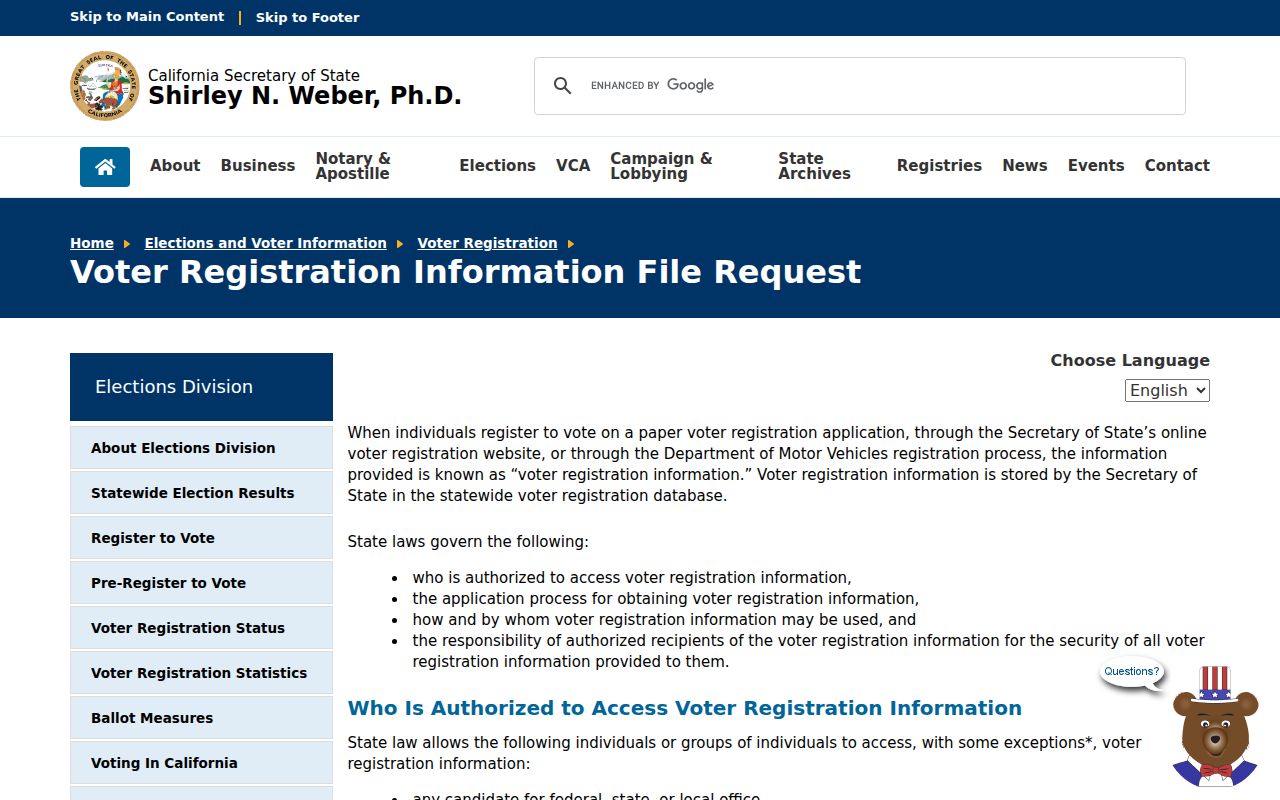
My Voter Status is a self-service tool. A Santa Clara voter supplies identifying information to see registration status, polling place, districts, ballot status, and election participation history. The public tool is not a name search for someone else and does not create a Santa Clara street roster.
Authorized Santa Clara voter-file applicants may request approved fields for election, scholarly, journalistic, political, or governmental purposes. The process requires an application, identity proof, purpose information, a security plan, a wet signature, and a fee. Available fields can include name, residence and mailing address, party, status dates, precinct, district, and election participation. Ballot choices are never included. Protected voters and sensitive identifiers are withheld.
The captured California My Voter Status form shows the permitted Santa Clara self-status route.
A Santa Clara resident lookup that reaches a protected voter should stop. Safe at Home uses a confidential voter process, and ordinary search methods should not be used to defeat it.
Santa Clara Vital Copies by Eligibility
California vital access governs Santa Clara birth, death, and marriage research through Health and Safety Code sections 103525 and 103526. The useful distinction is informational versus authorized certified copy. An informational copy is generally available for a public birth, death, or marriage when the event can be located. An authorized copy requires a qualifying relationship or role and a sworn statement in the routes that require it. Confidential marriages, sealed adoption material, and confidential birth portions have separate rules.
Santa Clara County holds county birth, death, and marriage certificates. The Santa Clara County Clerk-Recorder lists 2026 fees of $34 for birth, $26 for death, and $19 for marriage. CDPH lists state fees of $31, $26, $19, and $18 for divorce certificates. CDPH’s public-marriage coverage has year gaps. A divorce decree comes from the Santa Clara Superior Court, not the vital-record office.
Santa Clara state mail forms ask for the event date and place, names, parents’ birth names where applicable, copy type, relationship, requester contact, and signature. A no-record certificate can narrow a Santa Clara search without proving that an event never happened in another jurisdiction.
Santa Clara Inmate and Offender Sources
The Santa Clara County Department of Correction inmate finder is a narrow custody lookup. The state CDCR locator accepts a last name or CDCR number. California’s Megan’s Law site provides name, map, and address modes after its terms notice, but display categories are controlled by Penal Code section 290.46. None is a general Santa Clara resident directory, and absence from a public display is not proof that no record exists.
Santa Clara search data changes quickly. The Santa Clara County route and state route describe custody or registration records at a point in time. Use the published office contact when a name match needs confirmation, and do not copy a result into a broader identity profile.
The Santa Clara County inmate finder captured for the resident lookup research is shown below.
For the Santa Clara state registration route, use the California Megan’s Law search and follow its use warnings.
The California Megan’s Law interface is another narrow, statutory lookup rather than a general Santa Clara people index.
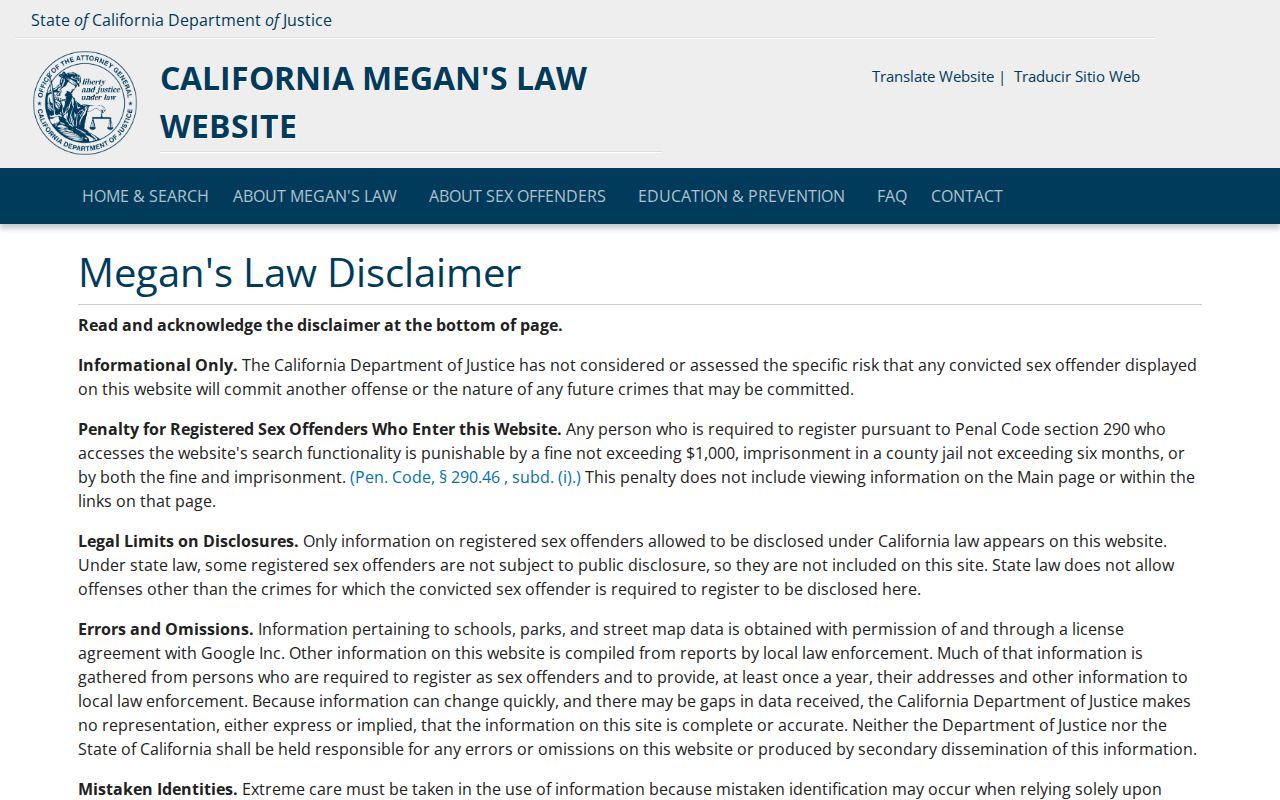
Its display rules depend on the category of record, so a Santa Clara result should be read with the state warning and verified through the proper office.
Santa Clara Heirs, Classmates, and Families
Different Santa Clara family-history goals call for different record trails. An heir search begins with the Santa Clara Superior Court probate party or case index, then uses petitions, notices, orders, obituary evidence, and the court file available to the public. Addresses in a probate filing are time-stamped. They are not necessarily current.
A birth-parent or adoptee search must use California’s authorized adoption and mutual-consent procedures. Sealed adoption records should not be bypassed. A former Santa Clara classmate search can use SCU yearbooks, student newspapers, Santa Clara library collections, or an alumni group’s published contact channel. A deceased former resident can be traced through a city directory, obituary, death record, cemetery entry, probate file, and deed out of the estate.
These Santa Clara routes are more reliable than trying to make one modern resident lookup answer a family-history question. For a Santa Clara search, the record type controls what can be seen and who may request a copy.
Santa Clara Business and License Roles
California bizfile Basic Search accepts a Santa Clara business name or file number, requires at least three characters for a name, and returns up to 500 closest results. Entity records show status, jurisdiction, type, formation date, addresses, agent, filing history, and document downloads. Santa Clara County fictitious-business-name statements disclose true owner names and business or mailing addresses under Business and Professions Code section 17920.
The California Department of Consumer Affairs umbrella search supports Santa Clara license questions and accepts board, license type, number, business, first name, last name, and registry fields. Results can show status or discipline, depending on the board. A license or business filing is evidence of an official role. It is not proof of home occupancy. Keep the Santa Clara search focused on the record question.
The state bizfile portal and DCA license search are the official Santa Clara starting points.
Santa Clara Privacy and Safe at Home
California’s CCPA and CPRA give Santa Clara consumers rights to know, delete, correct, limit sensitive information, opt out of sale or sharing, and receive equal treatment. The DROP system provides one encrypted deletion request to more than 500 registered data brokers, with processing beginning August 1, 2026. A Santa Clara resident can create a profile with chosen identifiers and retain confirmations.
Safe at Home is a separate address-confidentiality program for qualifying victims and certain threatened workers in Santa Clara and elsewhere in California. It offers a substitute address, mail forwarding, confidential voter registration, and a confidential name-change procedure. It does not erase old public records or conceal a Santa Clara parcel’s legal description. Recorded-copy redactions and DPPA limits also apply to other kinds of personal information.
Lawful personal use. A Santa Clara resident lookup is suitable for family history, reconnection, civic research, and personal safety awareness. Stop when a person is protected or a source is restricted, and never use records to stalk, harass, intimidate, or harm anyone.
Use the California DROP program for Santa Clara broker copies and the Safe at Home program for eligible address confidentiality. They solve different problems.
Verify a Santa Clara Resident Across Sources
A reliable Santa Clara resident lookup uses a short sequence and records the limits at each step. Begin with the name plus one Santa Clara anchor such as address, birth year, spouse, business, APN, or case number. Search the Santa Clara source that can answer that anchor. Then use a second source that was created for a different purpose.
- Write the Santa Clara name variants and the exact clue, including date and address.
- Use the parcel or official portal that matches the clue, not a broad name guess.
- Capture the Santa Clara record role, date, custodian, and document or case number.
- Compare a second independent source, such as a court, directory, vital, obituary, or business record.
- Contact the custodian for a certified copy or correction when the result matters.
The point is not to assemble every available Santa Clara detail. The point is to answer one Santa Clara question with the smallest reliable set of records. When the sources disagree, preserve the disagreement and stop short of a conclusion.