
Start Finding Santa Clara Residents
Start with the fact you already hold. An address points to the County Assessor and its GIS parcel layer. A past owner sends you to the Clerk-Recorder's grantor and grantee index. A court question goes to the Superior Court portal. Family-history leads open at the Heritage Pavilion, the California Room, or the Santa Clara University Archives. No single source works as a complete Santa Clara resident directory. None proves who lives somewhere today.
A careful search narrows from a broad clue to one named record. Copy spellings exactly. Keep the unit, street direction, ZIP, date, and APN whenever they appear. The APN is the county parcel number. It outlasts street names and mailing addresses. So it makes a steadier bridge when a parcel takes a new address. It also helps when an older Santa Clara street name gives way to a newer one.
- Normalize the Santa Clara address with USPS and confirm the parcel in MapSantaClara.
- Use the Santa Clara Assessor address or APN search for assessment and situs facts.
- Bridge the APN to the latest Santa Clara title instrument at the Clerk-Recorder workstation.
- Use the Santa Clara court, state, library, or vital-record route that fits the person question.
- When a Santa Clara record is not online, make a narrow request to its custodian.
A chain holds when two independent Santa Clara sources agree on the same name, date, and place. That agreement keeps a residents directory search tied to the right record. Remember the limits. An owner is not always an occupant. A permit applicant is not always a resident.
Which Santa Clara Offices Hold Records
Santa Clara is one city inside Santa Clara County. San José serves as the county seat. City hall produces council, election, permit, cemetery, and administrative records. The County Clerk-Recorder holds official instruments and vital services. The Assessor keeps parcel and roll evidence, and the Superior Court keeps case files. California state offices control voter-status tools, statewide vital-record routes, professional licenses, unclaimed property, and confidentiality programs.
Santa Clara County Clerk-Recorder
110 West Tasman Drive, First Floor
San José, CA 95134
408-299-5688
Santa Clara County Assessor
130 West Tasman Drive
San José, CA 95134
408-299-5500
Real Property Search
California Elections Status
California Secretary of State
Statewide self-service route
916-654-1141
My Voter Status
California's Public Records Act governs Santa Clara records requests. The citation is Government Code sections 7920.000 and following. No purpose statement is normally required. The Santa Clara residents directory depends on each custodian's actual access route. A custodian can still withhold exempt material, redact protected facts, or point a requester to the office that truly holds the record.
Santa Clara Assessor Address Search
The assessor's Real Property Search works from a Santa Clara address or APN. It is not an owner-name directory. Online results deliberately leave out assessee names. Begin with the situs address, the parcel's physical location. An advanced form splits the entry into parts. These parts cover street number, direction, core street name, type, unit, city, and APN. That split pays off when an older listing uses a different suffix. It also helps when one parcel carries more than one situs component.
| Assessor field | What the search accepts |
|---|---|
| Simple Address | Required property address; it is the situs, not the tax mailing address. |
| Street Number | Required in Advanced Address mode. |
| Street Name | Required core street name, with direction and type as separate controls. |
| Unit | Optional apartment or suite detail. |
| City | Required jurisdiction choice in Advanced Address mode. |
| APN Number | Required in APN mode; eight digits may appear with or without dashes. |
A parcel search yields a geographic anchor, assessment facts, and the APN your next office will want. County roll products differ. The secured roll includes assessee and billing fields. The Property Situs file cross-indexes parcels with physical addresses. Both are ordered under their own terms and should not be confused with the free web card.
Open the Santa Clara Assessor application for the live controls. A matching mailing address can hint at an owner's tie to a parcel. It cannot show who actually sleeps there. Each Santa Clara address record carries a ZIP. The screens also serve a ZIP code search. They produce no lawful ZIP-wide list of people. For a closer look, see the Assessor property-search view for Santa Clara address research.
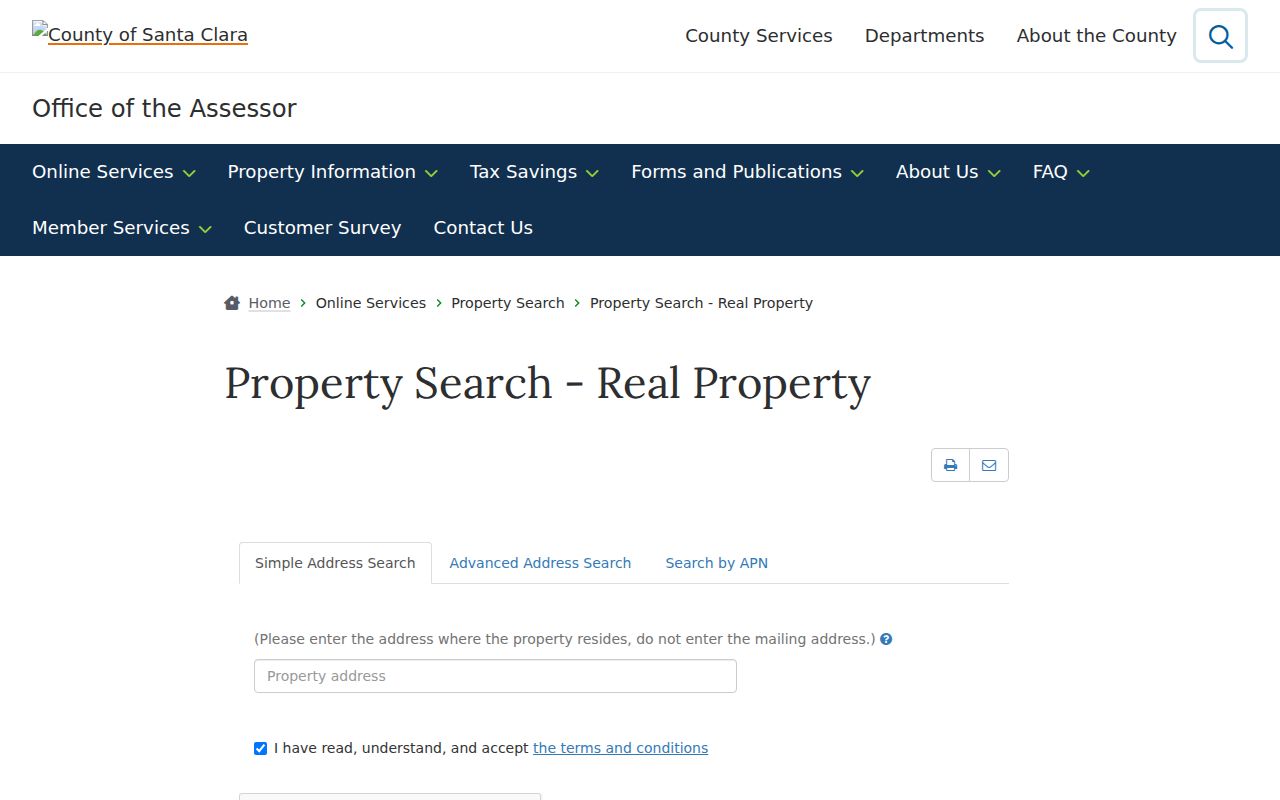
The image explains the choice. An address or APN gets you started, while names and occupancy still demand a separate, lawful record trail.
Why Santa Clara's Deed Index Is Offline
On November 5, 2018, the Santa Clara County Clerk-Recorder pulled its Official Record Index off the open internet. That decision pushed deed work back into the office. Santa Clara real-estate records still reach all the way to 1850, though, so the history is intact. Grantor and grantee research now happens on site. Public computers, bound books, microfilm, and Digital Reel material are available there. Staff will explain how the system works. They will not run an open-ended title search for you.
Bring a Santa Clara address or APN to the Assessor or a recorder workstation. That finds the most recent title-changing instrument. Open that deed for the grantee, grantor, recording date, and legal description. Then search the seller as an earlier grantee. A grantor transfers an interest. A grantee receives one. What you are building is a chain of title. It is not a roster of everyone who ever lived in a Santa Clara house.
The split matters for planning. Records from 1850 through 1980 sit on Digital Reel. Everything from 1981 forward is on the in-office public workstations. Those workstations may be limited to one hour when demand is high. Copies cost $4 for the first page, $2 for each added page, and $2 for certification. Phone and mail orders require an instrument number or book and page. Copies go out by mail rather than email.
The Clerk-Recorder search instructions lay out the office-only route. That public notice is the single most important detail for any Santa Clara residents directory search. It matters for any search that touches property records.
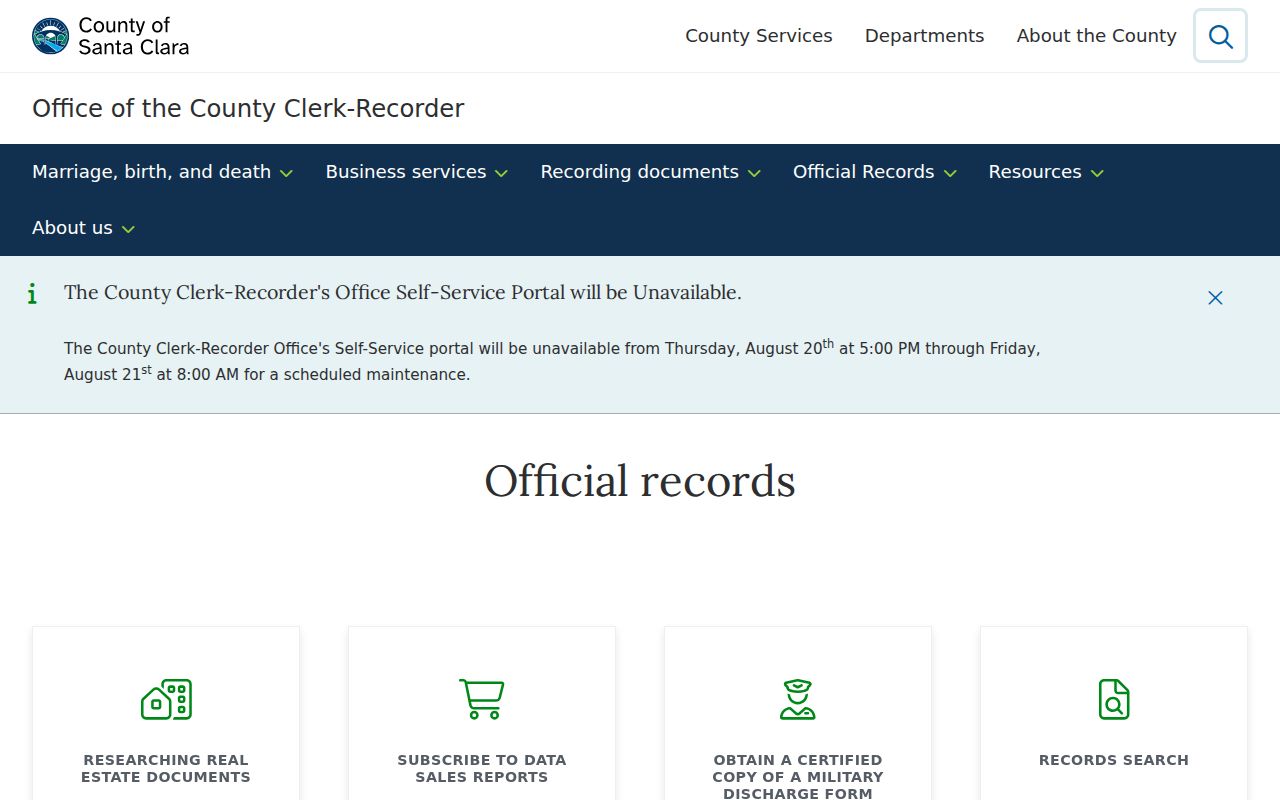
An offline index is a real inconvenience. Still, it clarifies the fallback for Santa Clara deed work. Start with the address to find an APN, then use the counter, the phone route, or a mail request to obtain the instrument itself.
Current Santa Clara Residents Directory Sources
A current Santa Clara residents directory works best when you treat it as a set of role-specific sources. No single record answers for a whole household. Each row below addresses a narrower question. The city permit portal can surface a project contact, the recorder can identify a party to an instrument, and the voter tool can confirm a voter's own status. Keep each Santa Clara role distinct. Stretching any one of them into a claim about everyone at a Santa Clara address is where errors creep in.
| Source | Who or what it identifies | Keeper | Access |
|---|---|---|---|
| Parcel and assessment search | Parcel, situs, APN, assessment facts | Santa Clara County Assessor | Free address or APN route |
| My Voter Status | One voter’s status, districts, and election history | California Secretary of State | Self-lookup |
| Official-record index | Grantors, grantees, liens, maps, and dates | Santa Clara County Clerk-Recorder | In-office research |
| POP and permit reports | Santa Clara address-linked projects and named record roles | Santa Clara Community Development | Portal and spreadsheets |
| Heritage Pavilion | Historical residents, deaths, land, maps, and newspapers | Santa Clara City Library | Library and licensed resources |
The Santa Clara Superior Court Public Portal belongs in a one-person Santa Clara search, not a current household list. The California Department of Consumer Affairs search works the same way. It identifies a license record and any discipline status, never a Santa Clara home. Name the record role in your notes. Preserve the date you searched.
- Resident roll
- A record set created for one purpose, such as property assessment, voting, or a historical directory.
- Index
- A locator that points to a party, case, document, date, or collection entry.
- Criss-cross directory
- An address-first section that reverses the usual name-to-address order.
- Parcel
- A mapped land unit identified by an APN and situs components.
Official rolls and commercial compilations also differ in how a reader can check them.
| Route | Strength | Limit |
|---|---|---|
| Official county or state record | Named custodian, dated fields, and a defined record role | Access can be office-only, restricted, or fee based |
| Library or archive collection | Historical context, original editions, and local help | Gaps, in-person access, and collection-specific coverage |
| Commercial compilation | May gather several public clues in one result | Can merge names, preserve old addresses, or omit source dates |
Santa Clara Court Party Search
The Santa Clara Superior Court public portal accepts a case number, party last name, business name, or filing-date range. Party-name searching works best when you already have the case category in mind. Filing-date searches are capped at a five-day range. Case types span civil, criminal, family, probate, and traffic. The portal is a real-time index, not the official court file, and remote visibility is limited by California Rules of Court rule 2.503.
A Santa Clara result may yield a case number, party role, case type, filing or status details, and calendar or docket links where remote access allows. A docket is a locator and a chronology. It is not an order or a certified copy. Sealed, juvenile, adoption, and other confidential matters stay restricted.
The Santa Clara court search is the official entry point for this residents directory research path.
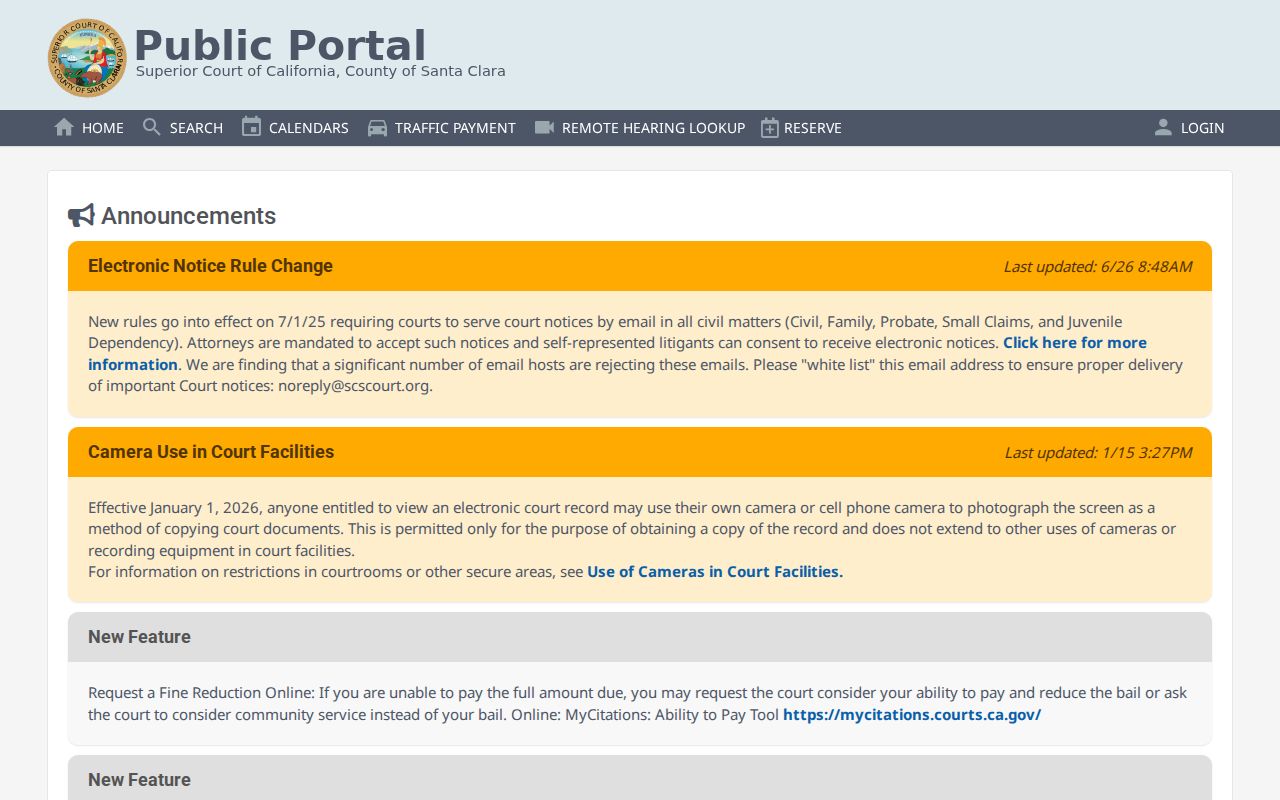
Older Santa Clara cases follow a different track. The court directs researchers to self-search at Records for filings on or before December 31, 1996. A copy request needs the case number when possible, or both parties' names plus an approximate year.
California Voter Status for Santa Clara
My Voter Status exists for one purpose. It lets a Santa Clara voter inspect their own registration. They can also view polling place, districts, vote-by-mail or provisional ballot status, and participation history. It is not a public Santa Clara street directory. Another person's voter data demands an approved applicant. The purpose must be election, scholarly, journalistic, political, or governmental. An application, identity documents, a wet signature, and a fee are also required.
The California file can carry Santa Clara residence and mailing fields. It may also list party, status dates, precinct, district, and election participation. It never discloses a ballot choice. Driver-license numbers and Social Security fragments stay withheld. So do signatures, unique identifiers, preregistered minors, and protected voters. Elections Code sections 2188 and 2194, along with related regulations, govern these records.
Reach the self-service status route through the California voter-status lookup.
Santa Clara voters enrolled in Safe at Home rely on the confidential voter process. The ordinary lookup should never be used to work around that protection.
Santa Clara Vital Record Paths
Santa Clara vital records follow an authorized-versus-informational structure rather than a plain age cutoff. If the event can be identified, informational copies of public birth, death, and marriage records are usually open. An authorized certified copy works differently. It demands a qualifying relationship or official role, often with a notarized sworn statement. Confidential marriages, adoption files, and confidential birth portions play by separate rules.
The county issues Santa Clara birth, death, and marriage certificates, and the Santa Clara County Clerk-Recorder posts 2026 fees of $34, $26, and $19 for those three. CDPH sets state fees of $31, $26, and $19, plus an $18 divorce certificate route. State public-marriage coverage has year gaps. For the periods CDPH does not hold, the county is the fallback. Start with the California vital-records gateway.
Divorce decrees live at the Superior Court. For Santa Clara events before July 1905, try the Heritage Pavilion, mission records, church sources, and county extracts.
Heritage Pavilion's Santa Clara Shelf
The Heritage Pavilion sits at Santa Clara's Central Park Library, 2635 Homestead Road. It holds a deep local-history chain. Its shelves include the 1852 California state census on microfilm. Historical maps and atlases, passenger-list indexes, early-settler files, cemetery headstone indexes, and land records round out the collection. Pre-1905 Santa Clara County vital extracts sit nearby. San Jose Mercury News microfilm from August 1869 through December 2011, with gaps, sits alongside them. Some microforms, CD-ROMs, periodicals, and audio never reach the catalog. Those stay in the Genealogy Room.
Ancestry Library Edition is licensed for in-library use. HeritageQuest, American Ancestors, FindMyPast, and Historical San Jose Mercury are licensed too. Society volunteers run scheduled one-on-one consulting. Bring a name, an approximate date, an address, and a list of sources already checked. The Santa Clara City Library genealogy collection gives the local shelf a human route. That helps when a modern portal shows only a role, date, or parcel.
California Unclaimed Property Clues
The State Controller's unclaimed-property search can reconnect a named Santa Clara owner with money left behind. A business reported the funds. It takes a last or business name, or a Property ID. First name, city, and ZIP serve as narrowing fields. A reported Santa Clara city proves nothing about current residence. Treat it as a lead. The claim process still needs identity proof.
Results work best when a name pairs with a Santa Clara city or ZIP clue. This helps most in family-history work. Keep similar names apart until two more facts agree. The portal is free, though the Controller decides each claim after reviewing evidence. The California unclaimed-property search offers a name-and-location lead, never a residence confirmation.
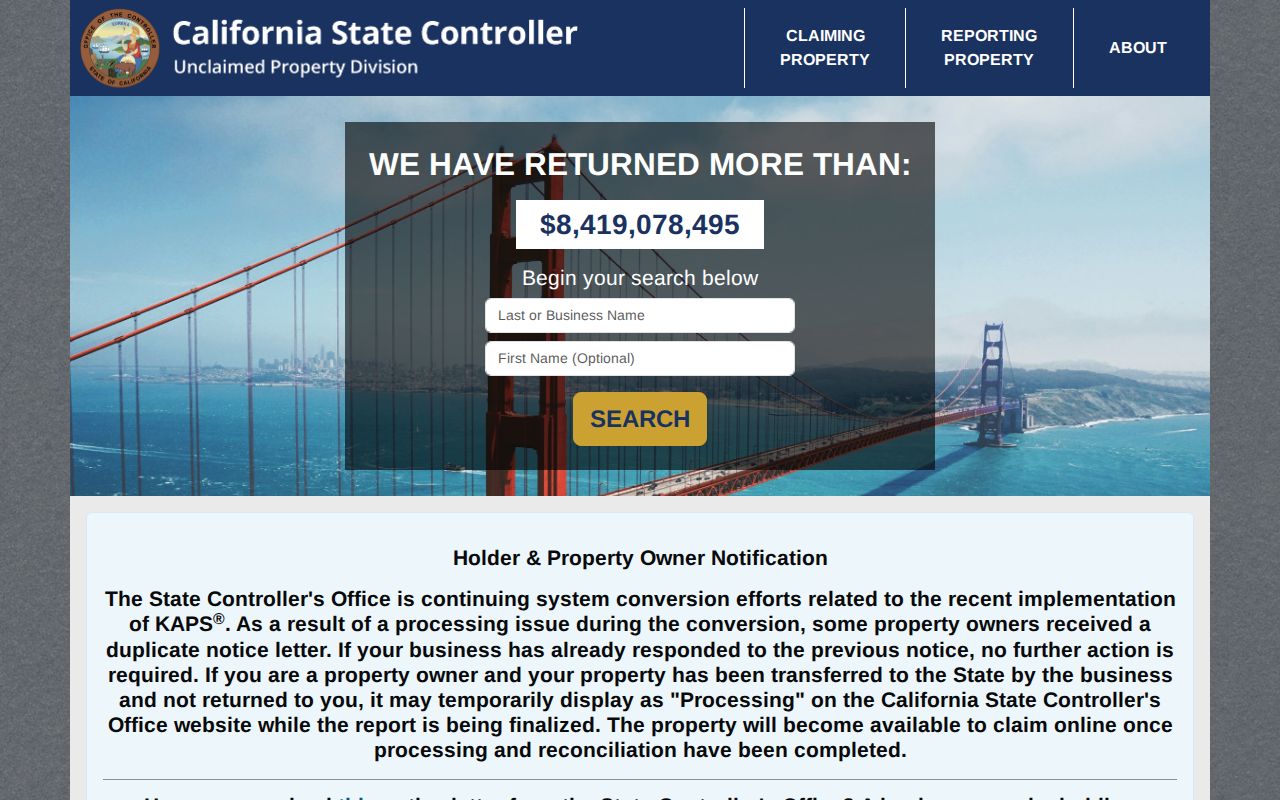
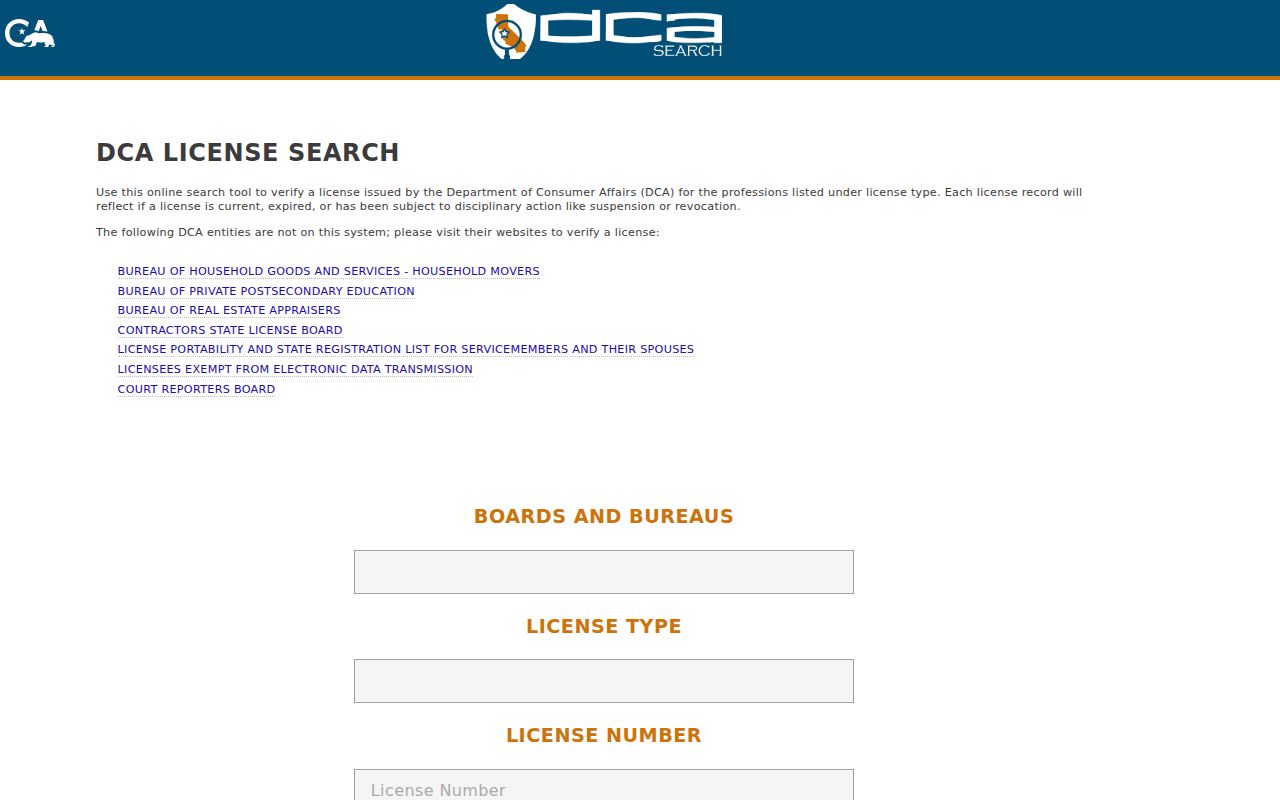
Keep any Santa Clara property result apart from address evidence. Follow the Controller's claim instructions before trusting a match. For role searching, the California Department of Consumer Affairs license lookup handles Santa Clara license research with board, type, number, business, first-name, and last-name fields. A license address or agent contact describes a professional record, not a household. The California license-search view displays the kind of official role record that can aid a name search.
Both sources are leads only. The issuing office verifies any status, date, or claim.
California Business Names in Santa Clara
California Secretary of State bizfile identifies a Santa Clara entity by name or file number. Basic search takes at least three name characters. It defaults to active entities. The query returns up to 500 closest results. Advanced filters cover starts-with, entity type or group, and status. They also span initial-filing date range and publicly traded disclosure.
A Santa Clara entity result can show formation date, jurisdiction, type, and addresses. It also lists the agent, filing history, and downloadable PDFs. An agent for service is a statutory contact. That role never presumes the agent owns or lives at the address. Santa Clara fictitious-business-name records offer another route to a true owner name. They carry separate clerk search and filing fees. Use the bizfile Online search as a name cross-check.
Santa Clara city business-tax and license data has no confirmed public search roster. Ask Santa Clara Finance or the city clerk directly instead of assuming one exists.
Santa Clara Public Records Requests
A City of Santa Clara record may sit behind no portal. The Santa Clara NextRequest system is then the practical route. Non-police requests also work by phone at 408-615-2220 or in person. Electronic production is free when possible, and inspection is always free. Paper copies run $0.10 per page plus postage. Off-site storage, redaction, and multi-department searches can slow an immediate inspection.
A strong request names the department and address. It should also include the permit or case number, record type, and inclusive dates. Ask for the native spreadsheet if the city maintains one. Permits-issued reports appear as monthly and annual workbooks. They are filterable by address when the portal lacks street browsing. Police reports take a separate route. They stay subject to investigative, victim, juvenile, medical, and privacy exemptions. File through the Santa Clara public-records portal.
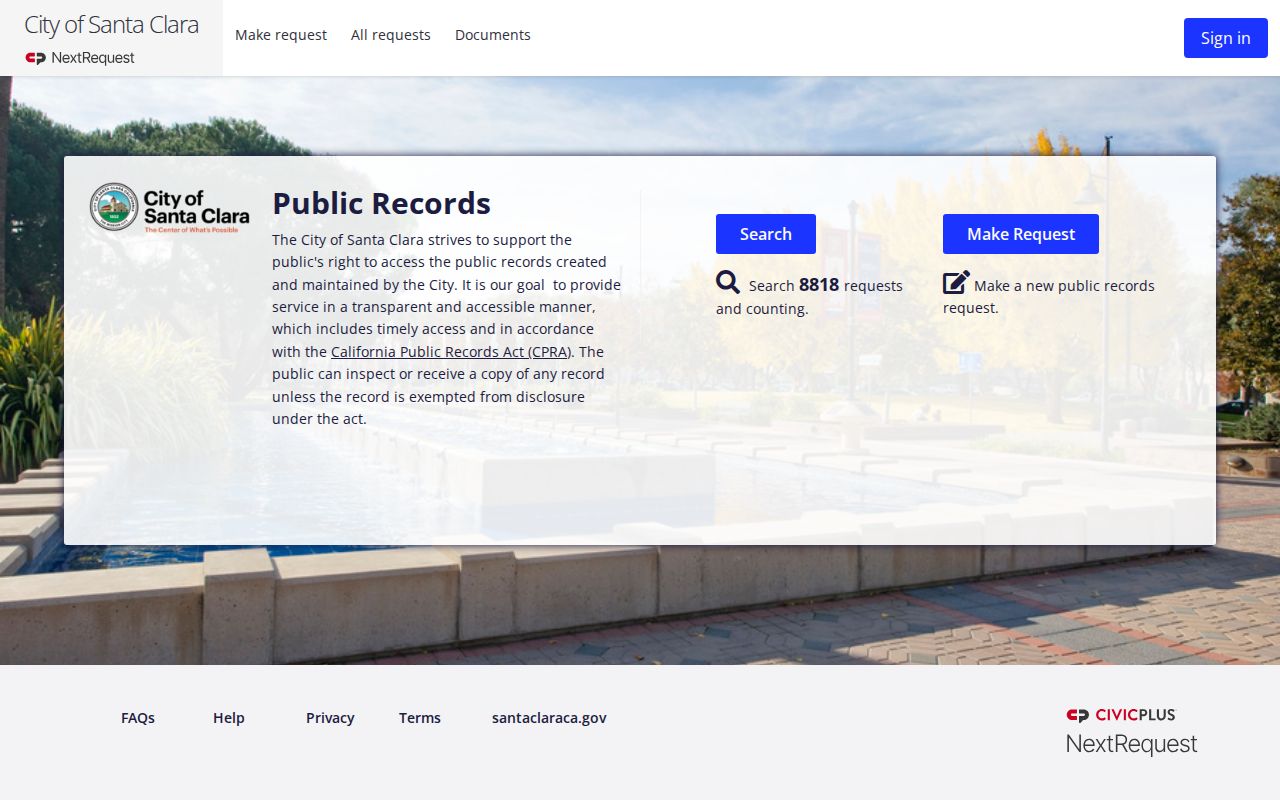
Santa Clara answers requests for records that already exist. Ask for a specific permit file, a council agenda item, or a named administrative record rather than a wide-open question. A focused request works faster. It also respects the exemptions that protect certain material from release.
Santa Clara Privacy and Safe at Home
California privacy law gives Santa Clara residents real leverage. The CCPA and CPRA grant rights to know, delete, and correct personal data, limit sensitive information, opt out of sale or sharing, and receive equal treatment. Global Privacy Control counts as a valid opt-out signal. The state's DROP system goes further, letting a resident send one encrypted deletion request to over 500 registered data brokers. Processing began August 1, 2026.
Safe at Home protects people, not data. It serves qualifying Santa Clara victims and certain threatened public or reproductive-health workers. An agency enrolls the participant, who then gets a substitute address, mail forwarding, confidential voter registration, and a confidential name-change procedure. The shield is not absolute. It cannot erase old Santa Clara public data or hide a parcel's legal description, and a deed may carry the substitute address while the land itself stays identifiable.
Lawful personal use. Santa Clara records support family history, civic research, reconnection, and personal safety awareness. Do not use a record to stalk, harass, intimidate, or harm anyone, and verify sensitive details with the custodian.
Santa Clara residents face two distinct problems, and the California DROP program and Safe at Home each solve one of them. DROP tackles the commercial copies of your information sitting in data-broker systems. Safe at Home guards an eligible person's address going forward.
Santa Clara Records History
Santa Clara County predates almost every record office in the state. It was one of California's original 27 counties, formed in 1850. Its Archives came much later. The office adopted a formal policy in 2004. It opened its doors in 2006. A 2007 grant of $200,000 came from the National Historical Publications and Records Commission. That funding set the pace for modern access. The grant aimed to process 1,500 cubic feet of material and build public indexes.
Those indexes turned out to be broad. They cover catalogs, planning photographs, map books, coroner inquests, naturalizations, wills and probate, militia enrollment, oaths, surveys, and dentist and doctor registers. The archival documents themselves are another matter. Most are not online at all. Researchers may photograph material with archivist permission, though the Archives does not certify copies.
The Clerk-Recorder's web index cutoff in 2018 fits a longer pattern. Some Santa Clara records are searchable. Some are only indexed. Some still require a person at the counter. The Santa Clara County Archives grant history helps explain why the record landscape here feels both rich and scattered.
Historical Santa Clara Resident Directories
Old directories for the city survive in two main places. The San José Public Library California Room holds Santa Clara and vicinity city directories from 1870 through 1979 in print. Microfilm runs cover 1870 through 1960. Santa Clara appears repeatedly from 1870 through 1908. It appears again in the listed 1909 to 1937 issues. Editions from Bettys, McKenney, Pacific Telephone and Telegraph, and Polk-Husted all show up in the matrix. Criss-cross issues exist for 1915 to 1919 and 1922 to 1937. They make street-by-street resident lookup possible for those years.
History San José adds its own shelf. It holds Santa Clara telephone books from 1905 through 2018, plus title abstracts, family files, obituary cards from 1879 through 1912, maps, yearbooks, school papers, and block books. Reverse access by street number begins in 1913 according to SJPL and in 1914 according to History San José. That one-year gap should stay as it is rather than be smoothed away. The full historical shelf sits in the Santa Clara city directory collections, a key layer of the Santa Clara residents directory for earlier households.
Santa Clara ZIP Geography
Santa Clara's residential ZIP areas are 95050, 95051, and 95054. Santa Clara University carries its own institutional code, 95053. Postal material also groups 95052, 95055, and 95056 with Santa Clara routing. Those codes are not established as ordinary residential delivery areas. A Santa Clara ZIP marks a delivery geography, not proof of city jurisdiction.
One 2010 change shows why the distinction matters. USPS moved 250 deliveries from San José 95117 to Santa Clara 95050 that year. No Santa Clara land was annexed and no municipal boundary moved. Verify a full address with USPS first. Then use MapSantaClara or the County jurisdiction finder for the city and parcel question. The Santa Clara ZIP code directory keeps those distinctions in one place.
Because of this split, a Santa Clara residents directory search should keep four fields separate. The situs address, the mailing address, the legal description, and the ZIP each answer a different question.